
Gurukul - The bonding between teacher and students

          The Gurukul education system was a form of residential education system where the students lived in a Gurukul which was the home of the teacher or ‘Acharya’ and served to be the center of education. The kernel of this education system lies in the principles of discipline and hard work. Students were expected to learn from their gurus and use their knowledge in practical life. The relationship that existed between the student and teacher is sacred and it often didn’t involve any formal payments but a Gurudakshina that the student offered the teacher as a homage to their relentless support. This education system began in ancient times during the Vedic age when there was no particular form of formal education but the learning was skill-based and religiously rooted in Vedas, Puranas and holy texts which were the imperative guide for students to expand their horizon of knowledge.

The Gurukul education system continues to inspire the world with its unique features which evolved over the years. This section enlists the unique features of this education system and gives an insight into its functioning.

  • The education given was profusely influenced by the culture and religion which were incremental elements of the ancient Indian society.

  • The emphasis was on holistic learning with an incremental focus on professional, social, religious and spiritual education.

  • The basis of being selected by a gurukul was an impeccable attitude and moral strength that could be displayed through impeachable conduct. 

  • Alongside knowledge of the art, literature, scriptures and philosaphy, students were also taught practical skills and trained for different tasks.
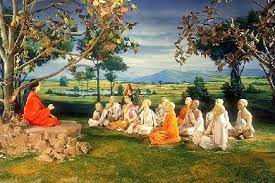
The gurukul education system resulted in the all-around development of the individual and emphasized a psychological method of teaching.


Comments

Popular posts from this blog

Paper Boat – An Activity Based on Poetry

Paper Boat – An Activity Based on Poetry The students of 5th standard participated in a creative classroom activity based on the poem “The Paper Boat” written by Rabindranath Tagore. To understand the poem better, students made paper boats using their own unique ideas. On this day, Mr. Vijay visited the class and observed the session. He appreciated the students’ creativity and the innovative paper boats they had made. The poem was explained in Kannada, which helped the students clearly understand its meaning. The students enjoyed the activity and showed great interest in the lesson. The session made learning joyful, creative, and meaningful.

Positive teacher and Student Relationship

                The Positive teacher and Student Relationship Session conducted by Navyashri Madam. Madam Started the Session with activity that was interesting and funny so all are enjoyed the activity. Then they thought about Qualities of Positive teacher and how to treat a students positively and All we shared our ideas of Positive teacher and They gave feedback . They thought about How to maintain Positive  Relationship with Students and All we shared our Strategies and Some of new they thought. After that we ask our questions and get answers from them. Totally Session went well and they thought very interestingly and this very informative session for us.

we live on earth we save Enviornment

                               We live on Earth, We Save Enviornment                    June 5th we celebrated them World Environment day in that day our teachers are speak about the environment why this growing is important to human life and also biological factors animals and birds all the important  biological livings it is wanted. our teachers is told to students in our birthday we give as a gift of a small plant to our teachers, our relatives, also friends it was good planting the trees. It gives good oxygen also cool weather it is wanted our state and country. Environment is protect human life without environment we cannot liveing on earth. We destroy  huge  forests because of constructed the railways and roads factories and other institutions and gowth infrstructres purpose our  constructions purpose we destroy number of forests. A ...